Why Young People Have Back Pain in Their 20s
Back pain is something we usually associate with older age.
But today, more and more people in their early 20s complain about back stiffness, lower back pain, or shoulder discomfort.
This wasn’t very common 10–15 years ago, so the obvious question is — why is this happening now?
The truth is, it’s not because our bodies have suddenly become weaker.
It’s because our lifestyle has completely changed.
1. Sitting is the New Default (Not Moving Enough)
Most young people spend almost the entire day sitting —
sitting in college, sitting at home, sitting during gaming, scrolling, or working on laptops.
The human body is designed to move.
When you sit for long hours without breaks:
- Muscles become tight
- Spine loses flexibility
- Blood flow reduces
- Posture becomes curved
This slow tension builds up and shows up as back pain later.
2. Phones and Laptops Changed Our Posture
Technology helped a lot, but it changed how we use our body.
Common posture mistakes among young people:
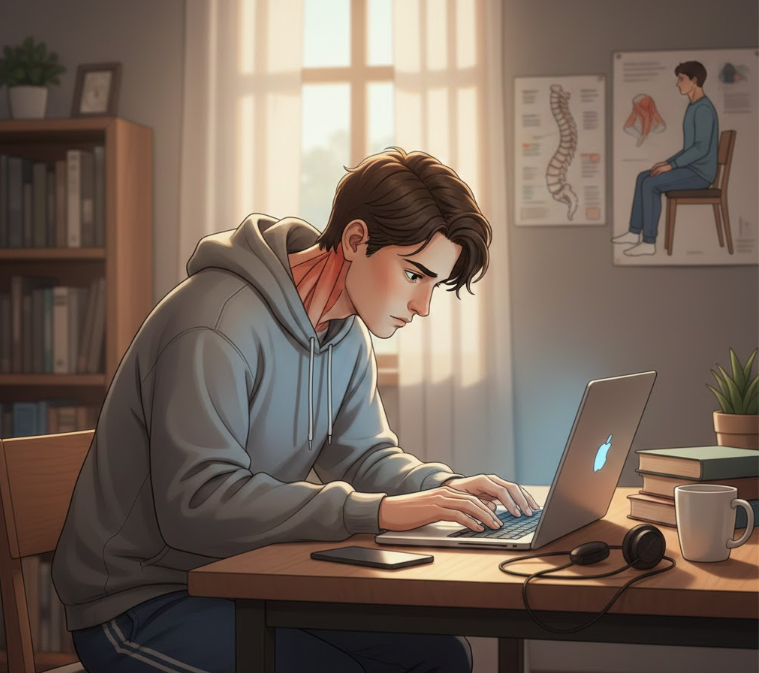
- Neck bent forward while looking at phone
- Shoulder rounding while typing
- Slouching on bed while using laptop
- Long gaming hours without stretching
Even 2–3 hours everyday is enough to cause:
- Neck strain
- Upper back pain
- Lower back tightness
This is not “disease”, it’s simply postural stress.
3. Weak Core Muscles (Because We Don’t Use Them)
Our parents and grandparents walked more, did physical chores, and moved naturally.
Today, everything is done through clicks and deliveries.
The core muscles (abdomen + lower back) are responsible for supporting the spine.
When these muscles become weak:
- The spine carries more load
- Sitting feels uncomfortable
- Lower back pain increases
Weak muscles + long sitting is one of the biggest modern reasons behind back pain.
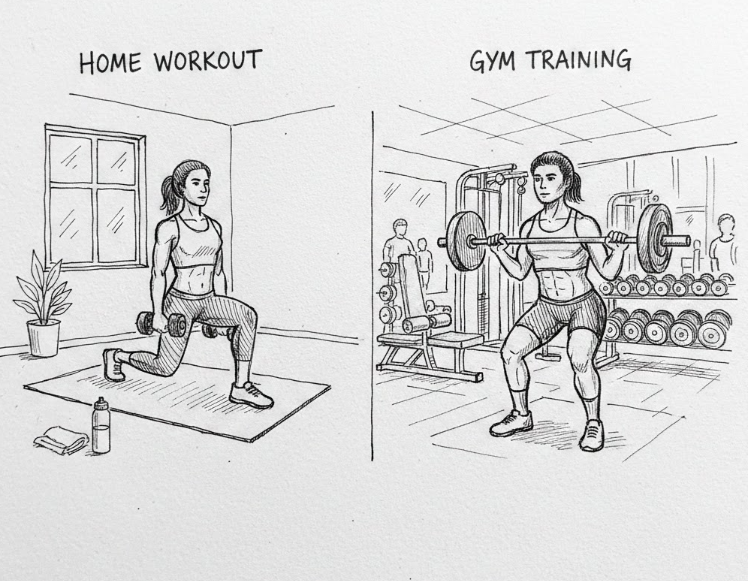
4. Gym Without Guidance (Wrong Training)
Many 20-year-olds go to the gym, which is good.
But without knowing basics, they:
- Lift heavy weights with bad form
- Ignore warm-ups
- Skip stretching
- Do only chest & arms and ignore back muscles
This creates muscle imbalance and leads to back discomfort.
Gym is not the problem — improper training is.
5. Stress and Lack of Sleep Affects the Body Too
Back pain isn’t always physical.
Young people today deal with:
- Study pressure
- Job pressure
- Uncertainty
- Competition
- Social media stress
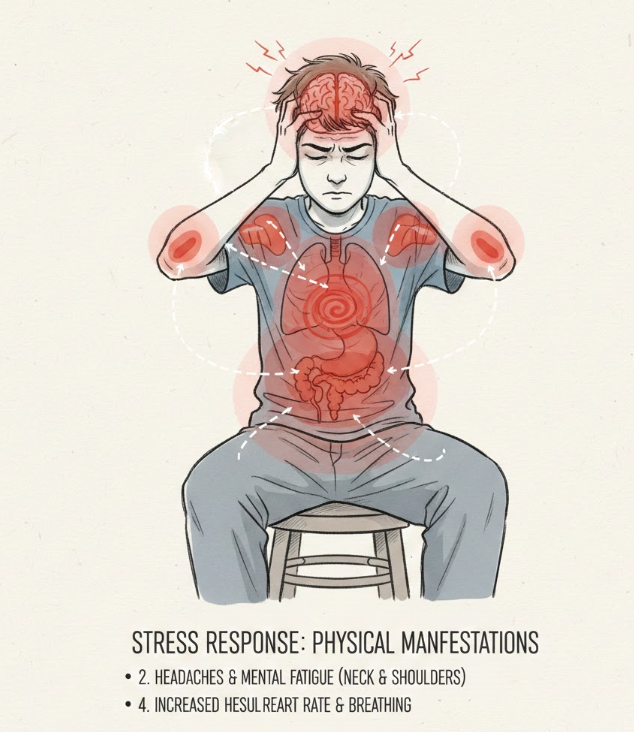
Stress causes muscles to stay tight, especially around the neck, shoulders, and lower back.
Poor sleep slows recovery and increases pain sensitivity.
That’s why some people say:
“My back hurts more during exams or work deadlines.”
It’s not imagination — the connection is real.
6. Modern Lifestyle Has Reduced Natural Movement
Earlier, people would:
- Walk to shops
- Sit on floor
- Bend and lift things
- Travel on bicycles
Now we:
- Order food online
- Sit on chairs and sofas
- Take cabs/bikes everywhere
- Avoid small movements
Sitting is comfortable but movement keeps the spine healthy.
7. Lack of Awareness
Most 20-year-olds don’t think about their body at all.
Pain is ignored until it becomes noticeable.
Simple habits like:
- Stretching
- Strengthening core
- Maintaining posture
- Taking breaks
- Proper sleep
…can prevent a lot of back issues, but nobody talks about them in school or college.
So What Can You Do to Prevent Back Pain?
You don’t need medicines or expensive physiotherapy to start fixing the basics.
Small changes help a lot:
✔ Move every 30–60 minutes
Even 2–3 minute walking breaks help.
✔ Fix posture habits
Keep screens at eye level instead of bending your neck.
✔ Strengthen your core
Simple exercises like:
- Planks
- Bridges
- Bird-dog
- Bodyweight squats
help support the spine.
✔ Stretch your hip and back
Most tightness comes from:
- Hip flexors
- Hamstrings
- Lower back muscles
Stretching improves flexibility.
✔ Sleep properly
Deep sleep helps the body repair tissues.
✔ Be mindful at the gym
Lift light, learn form first, then increase weight.
Final Thoughts
Back pain in the 20s is not a sign of aging or illness —
it’s a silent message from the body saying:
“You’re not using me the way I’m meant to be used.”
With a few healthy habits, most young back pain improves naturally.
Your body is not against you — it just needs movement, strength, and rest.