Why Young People Feel Tired All the Time (Even Without Doing Much)
If you ask any young person today, “How are you?”, you’ll hear things like:
-
“Tired bro.”
-
“No energy.”
-
“Mentally exhausted.”
-
“Dil nahi lag raha.”
-
“Bas thaka hua hoon.”
The surprising part? Many of them are not doing heavy physical work. They’re not farming, not lifting sacks, not doing 12-hour factory shifts. Yet they feel tired from the moment they wake up till they go to sleep.
So what’s happening? Why does an entire generation feel tired without “doing much”?
Let’s break it down in simple, real-life language — no medical drama, no fake motivational gyaan.
🌑 1. Mental Work Has Replaced Physical Work
Earlier generations did physical labor — farming, climbing, carrying, walking.
Today’s young generation does mental labor:
✔ Screen work
✔ Meetings
✔ Coding
✔ Studying
✔ Multitasking
✔ Trying to “stay productive”
Mental work doesn’t look tiring from the outside, but it drains your cognitive energy.
That’s why after 3 hours of office, online classes, editing videos, or coding, you feel exhausted even though you never left your chair.
🧠 2. The Brain Never Switches Off (Information Overload)
Aaj ka din kaise shuru hota hai?
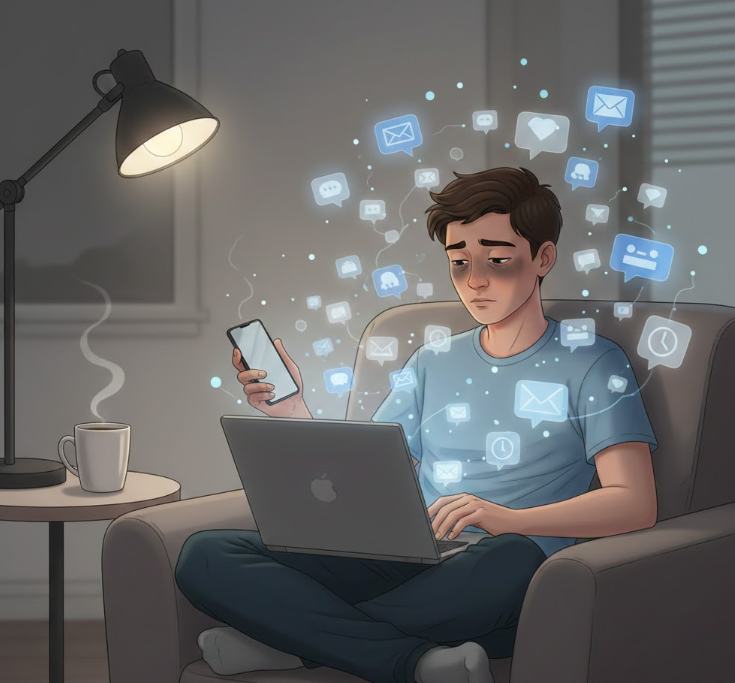
Most young people wake up and immediately check:
📱 WhatsApp
📱 Instagram Reels
📱 News
📱 Emails
📱 Stocks / Crypto Charts
📱 Notifications
Before getting out of bed, the brain has already processed hundreds of micro-stimuli.
Every notification is like someone tapping your shoulder saying:
“Look here, respond now!”
This constant attention switching exhausts the brain.
Earlier generation had:
-
Slow mornings
-
Less input
-
Few decisions
Today we have:
-
Infinite input
-
Infinite decisions
-
Zero mental rest
No wonder we’re tired.
🌙 3. Sleep Quantity Is Fine — Sleep Quality Is Not
Most young people sleep 6–8 hours, but still wake up tired.
Why?
Because:
✔ Phone till 2 AM
✔ Blue light exposure
✔ Irregular sleep schedule
✔ Caffeine late at night
✔ Overthinking before sleep
So even if you sleep 7 hours, deep sleep is just 2–3 hours.
Deep sleep = repair + recovery.
Without it, you wake up feeling like you didn’t rest at all.
🍔 4. Nutrition Is Poor (Fast Food ≠ Fuel)
Energy doesn’t come from junk food — it comes from nutrients.
Today’s food habits look like:
Breakfast = No breakfast or chai + biscuits
Lunch = Street food or office canteen
Evening = Burgers, fries, pizza, instant noodles
Night = Chips or sugar snacks
This causes:
✔ Blood sugar spikes & crashes
✔ Low iron & vitamins
✔ Constant fatigue
Most young people are undereating nutrients, not calories.
There’s a huge difference between feeling full and feeling energized.
☕ 5. Caffeine Is Replacing Real Rest
Most youths drink:
-
2–6 cups coffee/tea daily
-
Energy drinks during exams
-
Cold coffee during office hours
Caffeine doesn’t give energy — it blocks your brain’s tiredness signals.
So the body never gets real downtime.
Result?
✔ Afternoon crashes
✔ Insomnia
✔ Anxiety
✔ Low energy baseline
It’s a loan from tomorrow’s energy.
💭 6. Constant Comparison & Pressure (Invisible Stress)
Earlier stress came from:
-
Exams
-
Job
-
Family responsibilities
Aaj ke stress:
✔ “Why is everyone doing better than me?”
✔ “Why is my life slow?”
✔ “Everyone is earning, I’m nothing.”
✔ “He’s traveling, I’m stuck.”
✔ “She bought a car, I can’t.”
Instagram, LinkedIn, YouTube — all show only highlight reels, not reality.
Comparison drains energy.
Pressure drains energy.
Self-doubt drains energy.
This is emotional tiredness, not physical.
🎧 7. Zero Time With Silence
Earlier there were pauses:
-
No mobile in toilet
-
No screens in bed
-
No music during walks
-
No entertainment during food
Today:
➡ Eating with Reels
➡ Traveling with headphones
➡ Toilet with Instagram
➡ Bedtime with Netflix
➡ Gym with podcasts
Brain gets zero silence.
Silence is where the brain resets.
Without silence, you are alive but never recharged.
🧍 8. Low Movement Lifestyle
Most young lives today:
✔ Sitting in office or class
✔ Sitting in bed
✔ Sitting while studying
✔ Sitting for games
✔ Sitting for Netflix
So physically:
-
Blood circulation is low
-
Muscles are stiff
-
Oxygen is low
Low oxygen = low energy.
Movement creates energy, stillness kills it.
🧩 So What’s the Real Answer?
Young people are tired not because they are lazy but because:
✔ Their brain is overloaded
✔ Their sleep is poor
✔ Their food lacks nutrients
✔ Their life lacks silence
✔ Their work lacks movement
✔ Their environment pressures them
✔ Their caffeine replaces rest
This is modern exhaustion, not laziness.
📝 How to Fix It (Practical Steps)
No toxic positivity, no impossible tips — just realistic changes:
💡 Fix Sleep
– Sleep same time daily
– Reduce screens 1 hour before bed
– Keep room dark & cool
💡 Fix Food
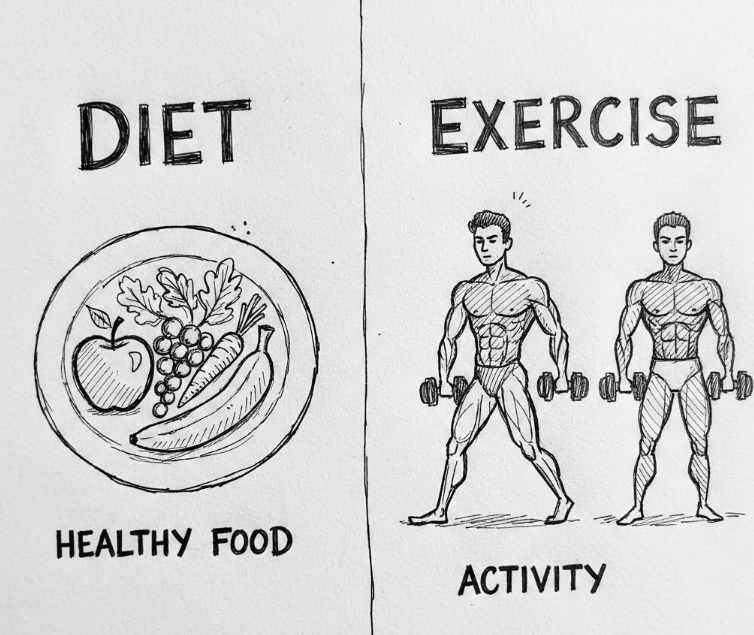
– Add fruits + eggs + nuts + vegetables
– Reduce junk from daily to weekly
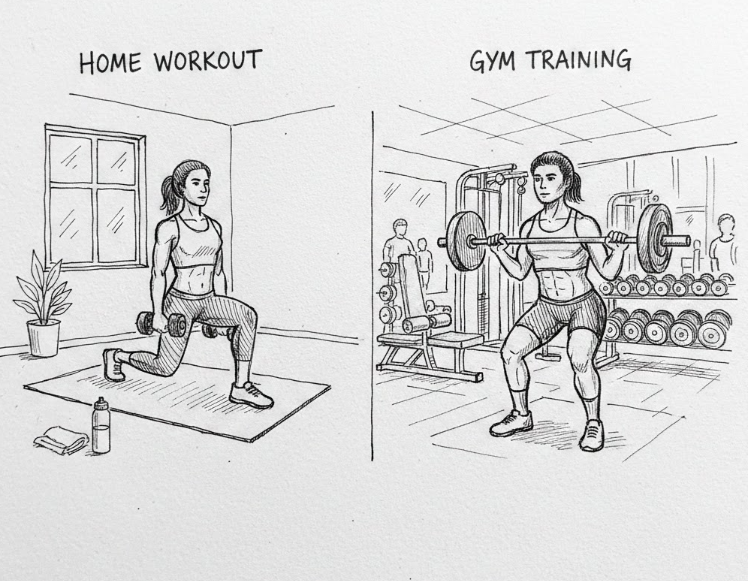
💡 Fix Movement
– 20–30 min walking daily
– Stretching if sitting long hours
💡 Fix Mental Overload
– Don’t check phone first 30 minutes after waking
– Keep 1 hour silence time daily (no screens)
💡 Fix Comparison
– Unfollow toxic pages
– Reduce Instagram/LinkedIn newsfeed time
These changes slowly restore energy.
🎯 Conclusion
If you’re a young person who feels tired all the time, remember:
You’re not weak — you’re overstimulated.
This generation lives in:
✔ Fast world
✔ Competitive world
✔ Overloaded world
✔ Connected world
But the human body is still built for:
✔ Sunlight
✔ Movement
✔ Real food
✔ Deep sleep
✔ Silence
Bring these back, and energy returns.