🧠 What Skills Will Matter the Most in 2026 and Beyond? (Real Future Guide)
The world in 2026 is not just moving fast—it’s moving in unpredictable directions. AI is automating tasks, companies are hiring globally, attention spans are shrinking, and “safe careers” are disappearing.
In this environment, skills are the new currency. The people who grow, adapt, and learn continuously will survive—not because they are the smartest, but because they are willing to evolve.
So the biggest question is:
👉 Which skills actually matter now and will still matter after 2026?
Here’s the real answer, based on global hiring trends, remote work patterns, AI adoption, and business needs—explained in simple English.
1️⃣ Critical Thinking & Problem Solving (Super Skill)
AI can produce answers, but AI cannot decide what problem actually matters—that’s a human skill.
Companies need people who can:
✔ Understand root causes
✔ Evaluate data instead of guessing
✔ Take logical decisions
✔ Avoid emotional decision making
This applies everywhere: coding, business, health, marketing, finance, and startups.
Reality Check:
People who know how to think will replace people who know what to think.
2️⃣ Communication & Storytelling (Remote World Skill)
In 2026, half the global jobs that pay well are remote or semi-remote, which means:
➡ You don’t need to be in the same country
➡ You need to be able to explain clearly
Good communication is not English grammar—it’s:
✔ Explaining ideas simply
✔ Writing clear emails & docs
✔ Talking to clients confidently
✔ Presenting solutions without confusion
Soft truth:
There are lakhs of skilled people who never grow because nobody understands them.
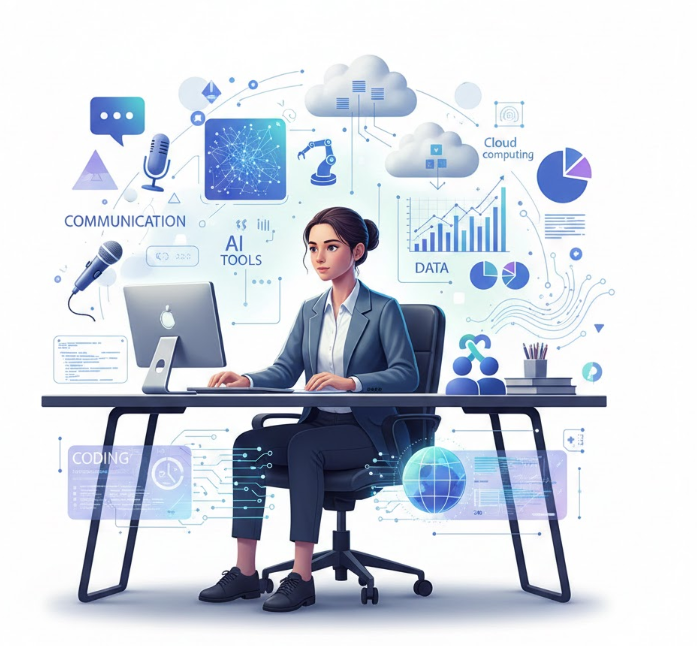
3️⃣ Digital & AI Literacy (Non-technical people also need this)
AI is not just for engineers.
In 2026, every job uses AI tools in some way.
Examples:
📊 Marketing → uses AI for analytics
🎨 Designers → use AI for creative assistance
✍ Writers → use AI for research & drafts
👩💻 Developers → use AI for debugging & documentation
📁 Businesses → use automation for customer tasks
You don’t need to build AI, but you need to use it.
4️⃣ Data Understanding (Not Data Science, Data Sense)
You don’t need to become a data scientist.
But you must understand:
✔ What the numbers mean
✔ What story the data is telling
✔ Which metric matters
✔ Which decision is correct
Because companies in 2026 don’t guess — they measure.
Examples:
-
YouTube creators check retention & click-through rates
-
Businesses track customer acquisition cost
-
Apps track daily active users
If you understand data → you become valuable.
5️⃣ Tech Amplifier Skills (High Salary Growth Skills)
These skills “boost” any career:
✔ API understanding
✔ Cloud basics (AWS / GCP)
✔ Automation tools (Zapier / Make / RPA)
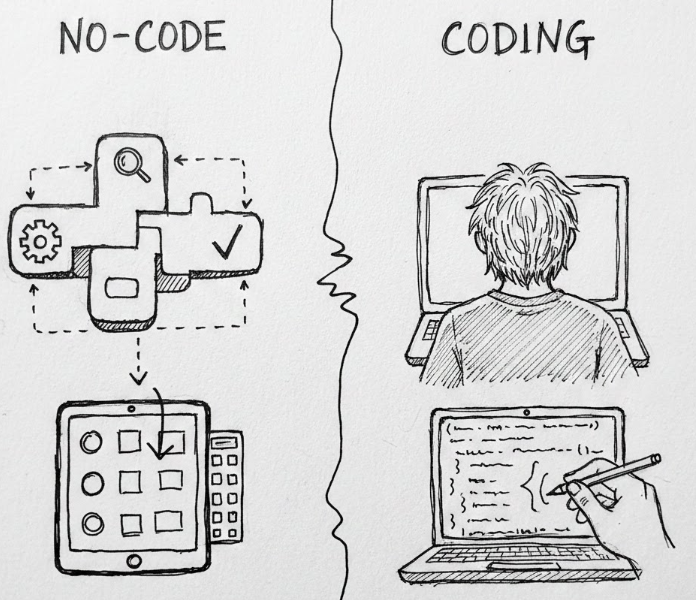
✔ Low-code tools (Notion / Retool / Bubble)
✔ Cybersecurity basics
✔ Database basics
Even non-engineers benefit from these, because they:
➡ Reduce manual work
➡ Increase productivity
➡ Impress employers
➡ Save company money
Productivity = Salary.
6️⃣ Adaptability & Learning Speed
The world is not rewarding degrees, it is rewarding upgradeable humans.
Skills expire faster today.
In 1990: a skill lasted 15 years
In 2010: a skill lasted 5 years
In 2026: some skills last 6–18 months
Examples: frameworks, tools, marketing strategies, design trends.
The future belongs to people who can say:
“I don’t know this… but give me a week.”
7️⃣ Entrepreneurship & Resourcefulness (Not Startup, Mindset)
Entrepreneurship in 2026 doesn’t mean building unicorns.
It means:
✔ Taking responsibility
✔ Identifying opportunities
✔ Managing time & resources
✔ Turning ideas into results
Companies hire people who think like owners.
Not people who wait for instructions.
So… Which Skills Actually Pay in 2026?
These skills turn into money faster than degrees:
💰 Communication → clients trust you
💰 Digital Literacy → work smarter
💰 Data Sense → smarter decisions
💰 AI Productivity → faster output
💰 Entrepreneurial mindset → better career growth
This is why people with medium intelligence + high adaptability outperform people with high intelligence + low adaptability.
What Should You Learn First?
If you're just starting, learn in this order:
Step 1: English + Communication
Step 2: Digital & AI Tools
Step 3: Data Basics
Step 4: Domain Skill (coding, marketing, design, etc.)
Step 5: Soft Skills (writing, presenting, networking)
This combination makes you unstoppable.
Final Truth
In 2026 and beyond, careers won’t be decided by:
❌ college
❌ degrees
❌ luck
❌ family income
They’ll be decided by:
✔ adaptability
✔ learning
✔ communication
✔ digital skill
✔ problem solving
✔ mindset
If you build these, the world can’t ignore you — and AI can’t replace you.