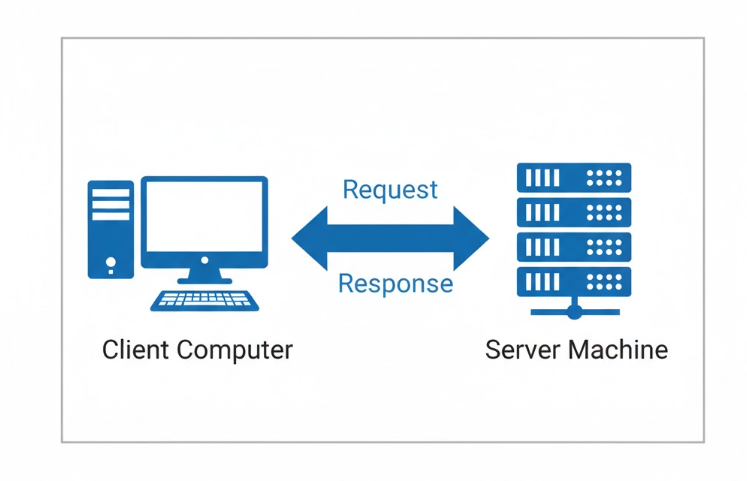
🧩 What Is a Server? Explained Simply (For Beginners)
If you’ve ever used Google, watched YouTube, or sent a WhatsApp message, you’ve already interacted with servers — even if you didn’t realize it.
So let’s explain it in the simplest possible way.
⭐ 1. What Exactly Is a Server? (Simple Definition)
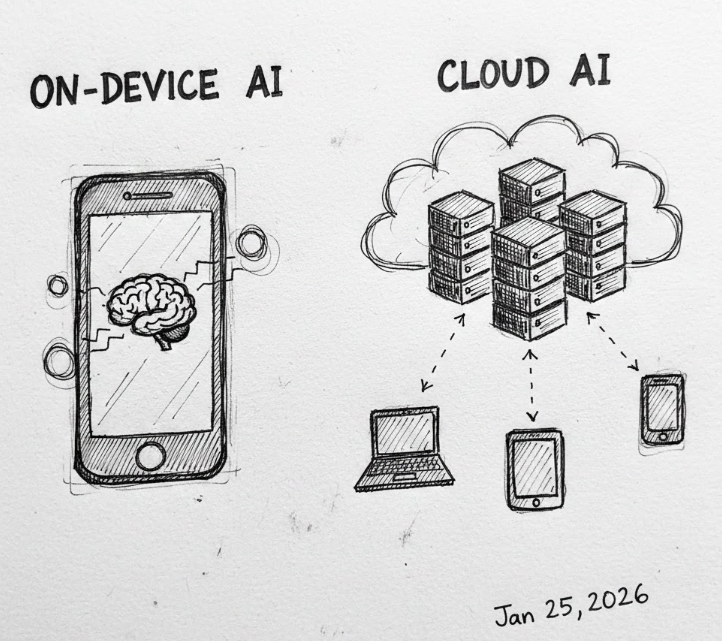
A server is a powerful computer that stores, processes, and delivers data to other devices over the internet.
Whenever you:
- search something on Google
- watch a video
- browse Instagram
- shop on Amazon
you are actually requesting data from a server.
The word “server” comes from “serve” — because it serves data to you.
🍽 2. Real-Life Example (Restaurant Analogy)
Imagine you’re at a restaurant:
- You = client (user)
- Waiter = server
- Kitchen = database
You say: “One dosa, please!”
The waiter goes to the kitchen, gets your food, and brings it to you.
Similarly on the internet:
- You type
google.com - Your browser sends a request to a server
- The server processes it
- And sends back a response
Same idea. Just data instead of dosa. 😄
💻 3. How Is a Server Different from a Normal Computer?
Servers are also computers, but they are designed to handle many users at the same time.
FeatureServerNormal ComputerMain UseServe data to many usersPersonal useUptimeRuns 24/7Runs sometimesHardwareHigh performanceMedium performanceSecurityStrongBasicLocationData centersHome/Office
So servers need:
- more RAM
- more CPU
- faster storage (SSD/NVMe)
- stable cooling
- stable power
🏢 4. Where Do Servers Live? (Data Centers)
Servers are stored in big buildings called data centers.
A data center has:
✔ backup electricity
✔ cooling systems
✔ fire control
✔ high-speed fiber internet
✔ physical security
Some major providers are:
- Amazon AWS
- Google Cloud
- Microsoft Azure
- DigitalOcean
- Oracle
- Linode
- Hetzner
Imagine huge rooms filled with thousands of machines — that’s a data center.
📡 5. Types of Servers (Beginner-Friendly)
There are many types, but here are the basics:
🔹 Web Server — runs websites
→ Examples: Apache, Nginx
🔹 Application Server — runs backend logic
→ Examples: Node.js, Django, Laravel
🔹 Database Server — stores structured data
→ Examples: MySQL, MongoDB, PostgreSQL
🔹 File Server — stores & shares files
→ Example: NAS servers
🔹 Mail Server — handles emails
→ Example: SMTP, IMAP servers
🔹 Game Server — handles multiplayer games
→ Example: PUBG, Minecraft, Valorant servers
🔄 6. How a Server Works (Request → Response)
Here’s the basic flow:
- You enter a website URL
- Browser sends a request
- Server receives it
- Server processes data
- Server sends response back
- Browser shows result to you
Example:
You click a YouTube video → Server streams video → You watch it
Simple.
🔐 7. Why Are Servers Important?
Without servers, the internet wouldn't exist.
No:
❌ Google search
❌ Online shopping
❌ Banking apps
❌ Gaming
❌ Streaming
❌ Payments (UPI)
Everything depends on servers.
🔐 8. Why Do Servers Need Strong Security?
Servers store sensitive data like:
- bank details
- messages
- emails
- business files
- government records
So they use:
✔ Firewalls
✔ Encryption
✔ Backups
✔ Authentication
✔ DDoS protection
✔ Monitoring tools
💰 9. How Much Do Servers Cost?
Depends on:
- hardware
- bandwidth
- location
- usage
Typical pricing:
- Shared hosting: ₹80 – ₹300/month
- VPS servers: ₹400 – ₹2000/month
- Cloud servers: ₹3000 – ₹50000/month
AWS, GCP & Azure are usage-based (pay for what you use).
🇮🇳 10. Server Jobs in India (Growing in 2026)
Server-related fields in demand:
✔ DevOps Engineer
✔ Cloud Engineer
✔ Backend Developer
✔ Network Engineer
✔ System Admin
✔ SRE (Site Reliability Engineer)
Every company moving to cloud → job demand rising.
🏁 Conclusion (Simple)
A server is the backbone of the internet.
It may look like just a computer, but without it:
- no websites
- no apps
- no payments
- no messaging
- no streaming
Servers keep the digital world alive.