🧩 What Is a Database? Explained Simply with Real Examples (2026 Guide)
If you use a phone, order food online, send WhatsApp messages, or scroll Instagram, you are already interacting with databases every single day — even if you never noticed.
Most people think “database” is a complicated IT word, but it’s actually quite simple. Let’s break it down in plain language.
⭐ 1. What does “Database” mean? (Simple Definition)
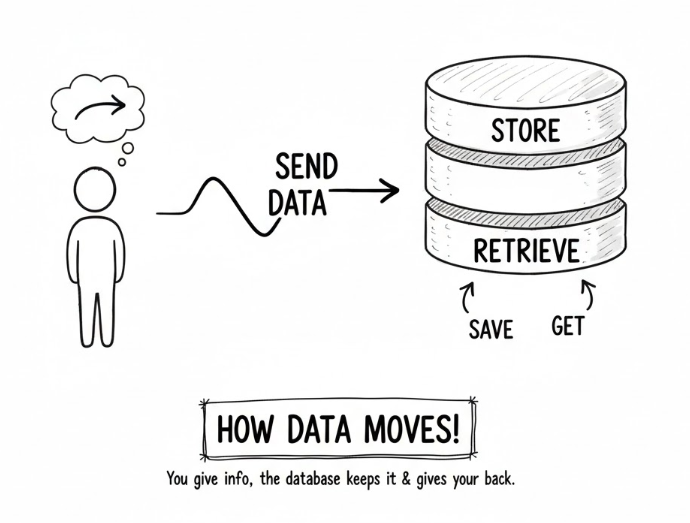
A database is a system that stores, organizes, and manages data so it can be easily accessed, updated, and used.
In simple words:
A database is like a digital storage room where information is kept in an organized way.
Without databases, apps and websites would not know who you are, what your account contains, or what you are trying to do.
📦 2. Real-Life Example (To Make It Crystal Clear)
Imagine a school that has:
- attendance records
- student report cards
- fees details
- teacher info
If all this data was written in notebooks and kept on shelves, it would be difficult to:
- search a student’s marks
- update attendance
- find fee receipts
Now imagine the same information stored digitally in a database. Then:
✔ the principal can search any student in seconds
✔ teachers can update attendance instantly
✔ accounts team can track fees easily
This is exactly what databases do — solve the problem of storing and managing data efficiently.
🌐 3. How Databases Work in Apps We Use Daily
Let’s look at examples from daily life:
Whenever you send a message:
- the chat is stored in a database
- your contacts are stored in a database
- your profile info is stored in a database
Else your chats would disappear every time you close the app.
🛒 Amazon / Flipkart
They store:
- product names
- prices
- stock levels
- orders
- user addresses
If these were not stored, you couldn’t reorder anything, track orders, or compare prices.
🏦 Banks / UPI
When you pay someone using UPI:
- your bank balance updates in a database
- transaction records are saved in a database
- account details are verified from a database
Without this, digital payments would be impossible.
So even if you don't notice, databases run the modern world.
📑 4. Databases vs Spreadsheets (Very Common Confusion)
A lot of beginners think:
“Isn’t a database just like Excel?”
Not really.
Here’s the difference:
FeatureSpreadsheetDatabaseUsersDesigned for 1–2 peopleMany users at the same timeData sizeSmallVery largePerformanceSlows down easilyHandles millions of recordsAutomationVery limitedHighly automatedSecurityBasicAdvancedBackupManualAutomatedMulti-userNot idealBuilt for it
Spreadsheets are great for small personal work.
Databases are built for scalable, secure systems like banking and social media.
🧱 5. Two Big Types of Databases
There are many types, but beginners should know just two:
A) SQL Databases (Structured)
Think of them like well-organized tables with rows and columns.
Example SQL databases:
- MySQL
- PostgreSQL
- Oracle
- SQL Server
- MariaDB
Used in:
- banking systems
- e-commerce
- school management
- ERP systems
B) NoSQL Databases (Flexible)
These don’t follow strict table structure. They store data like:
- documents
- key-value pairs
- graphs
- JSON objects
Example NoSQL databases:
- MongoDB
- Firebase
- Cassandra
- Redis
- DynamoDB
Used in:
- social media feeds
- chat applications
- IoT systems
- real-time analytics
🧩 6. Why Do We Even Need Databases?
Because they solve real-world problems:
✔ Store huge amounts of information
✔ Handle millions of users at once
✔ Protect data with security
✔ Allow backup and recovery
✔ Support automation and workflows
Imagine Facebook without a database — all profiles, posts, likes, messages… gone.
So databases are not optional — they are the foundation of digital systems.
💾 7. Where Are Databases Stored?
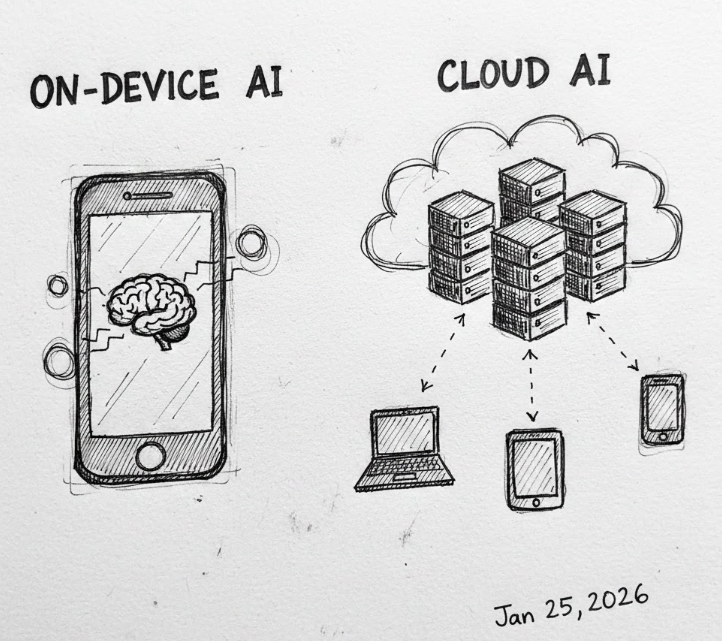
Databases are stored on servers, and those servers are kept inside data centers.
A data center includes:
- rows of server racks
- cooling systems
- fire protection
- physical security
- high-speed fiber internet
- backup power
Companies don’t keep databases at home — they use:
- AWS
- Google Cloud
- Azure
- DigitalOcean
- Oracle
- Hetzner
- Linode
These platforms provide reliable cloud databases.
🧠 8. Database Jobs are Booming (Especially in India)
Since every business is becoming digital, database jobs are increasing:
Companies need people like:
- Database Administrator (DBA)
- Data Engineer
- Backend Developer
- Cloud Database Architect
- DevOps Engineer
- SRE Engineer
So databases are not just technical — they are a career opportunity.
🎯 Conclusion
A database is not just a technical concept — it is the backbone of modern digital life.
Every time you:
- log into Instagram
- check your bank balance
- book a ticket
- buy something online
a database makes it possible.
If servers are the heart of the internet, then databases are the memory.
Without them, the digital world would collapse in seconds.